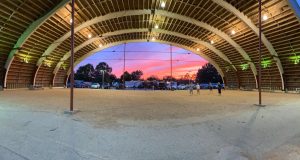
Why a Browning Hangar Conservancy Makes Sense for Mueller
The Browning Hangar is a City-owned public space located within Mueller. Its future affects not only the broader Austin community, but also the people who live nearby. As Mueller continues to mature, the key issue isn’t whether the Hangar should exist — it’s how it’s managed over time. A nonprofit conservancy is one practical option that helps address the concerns most often raised by nearby residents.
In plain terms, here’s what a conservancy offers
 No cost to homeowners
A Browning Hangar Conservancy would not be funded by HOA dues or homeowner assessments. Its operating funds would come from a mix of City support, grants, private donations, and modest earned revenue — not residents.
Clear responsibility
Right now, it’s often unclear who is responsible for decisions about the Hangar. A conservancy creates:
one accountable steward
defined roles
predictable decision-making
This reduces confusion and avoids informal or ad hoc actions.
Fewer surprises
Clear stewardship means fewer sudden changes, fewer unresolved issues, and less pressure on the HOA to step in when problems arise.
Financial sustainability without commercialization
A conservancy allows the Hangar to cover basic operating needs — things like maintenance and restrooms — without turning it into a private business or entertainment venue.
The goal is stability, not profit.
A well-managed neighborhood asset
When public spaces are clean, active in appropriate ways, and consistently maintained, they tend to add value to surrounding neighborhoods.
A conservancy focuses on:
- compatibility with residential areas
- daytime and family-friendly use
- predictable operations
- maintaining appearance and order
A role for the HOA — without added burden
The Mueller HOA remains an important stakeholder, but a conservancy means the HOA is not the default manager.
Concerns are addressed through clear channels, rather than informal or reactive measures.
The bottom line
A Browning Hangar Conservancy is not about expanding use, shifting costs, or changing ownership.
It’s about:
clarity instead of ambiguity
stability instead of drift
stewardship instead of neglect
making the Hangar an asset, not a concern